Laser Room Measuring Tool Explained: A UK Buyer's Guide
Laser Room Measuring Tool Explained: A UK Buyer's Guide
A tape measure still has its place, but it becomes slow, awkward and error-prone the moment you are measuring across a furnished room, up to a ceiling line, or around a live work site. A laser room measuring tool solves that problem by giving you fast, repeatable distance readings with far less guesswork. For UK homeowners, tradespeople, fit-out teams and survey-minded DIY users, it can save time on every quote, layout check and installation.
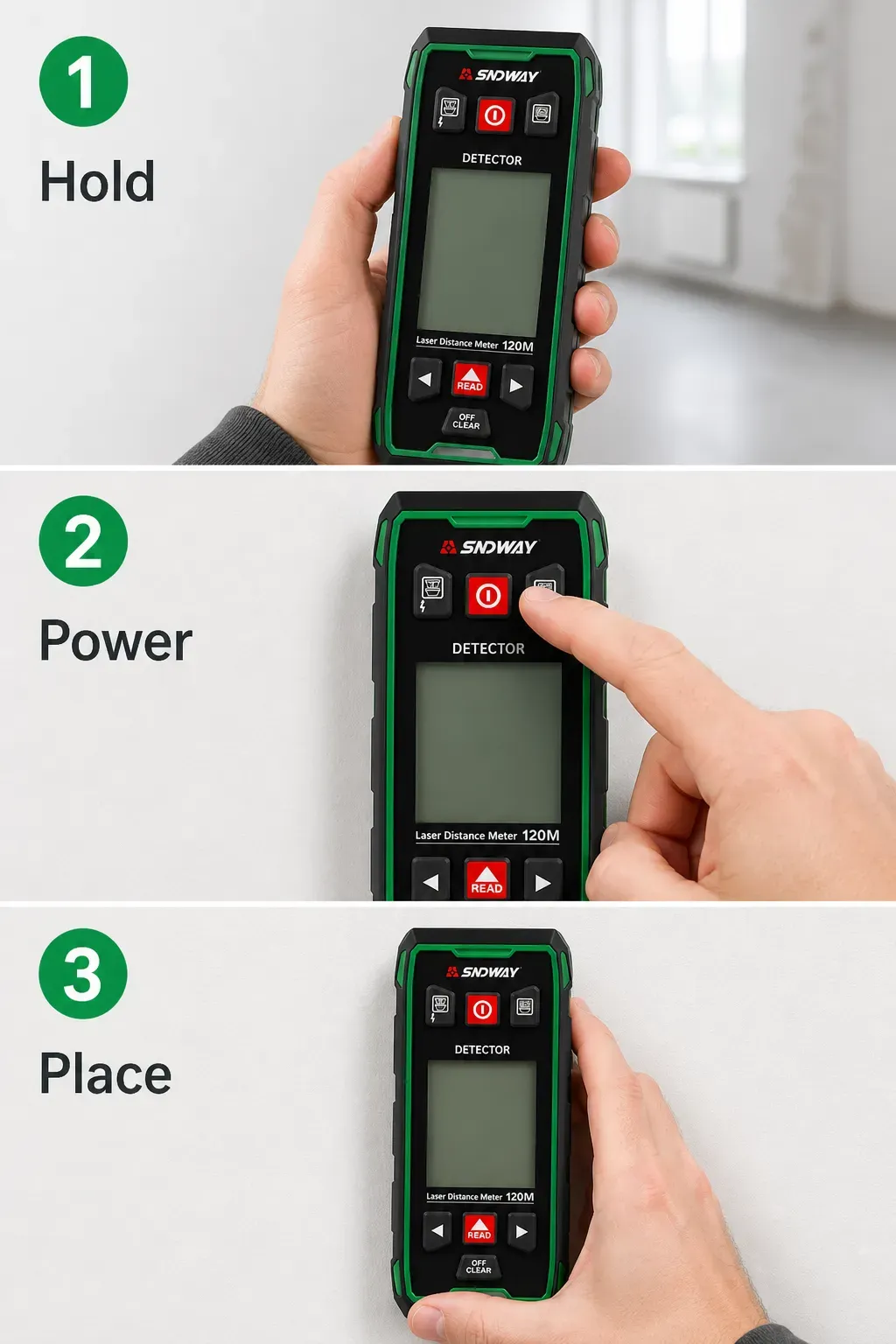
The most useful models now do more than measure a wall-to-wall span. Trade-ready tools can also help you scan for hidden metal and live wiring before drilling, then switch straight into long-range measuring. That combination matters on British sites where speed is important, but safety is non-negotiable. TikTokPage Tools follows that practical approach with a wall scanner laser distance meter designed for safer, faster site work: scan for hidden wires and metal, then measure up to 120 m with one tool.
Key Takeaways
- A laser room measuring tool uses a laser beam to calculate distance quickly and accurately across rooms, hallways and work areas.
- It is particularly useful in UK homes and job sites where obstacles, uneven walls and ceiling height make tape measuring slower.
- The best choice is not just about maximum range; accuracy, visibility, ease of use, memory functions and build quality matter more day to day.
- For safer work, a combined wall scanner and laser distance meter adds value by helping locate hidden wires and metal before drilling or fixing.
- Trade users should look for a tool that can measure up to 120 m, store readings and cope with regular on-site handling.
What is a laser room measuring tool?
A laser room measuring tool is a handheld electronic device that measures distance by sending a laser to a target surface and calculating the return. In practical terms, you place the tool against a reference point such as a wall, skirting line or door frame, aim at the opposite surface, and receive a digital measurement on screen within seconds.
Most tools can also calculate area and volume, which is useful when planning flooring, paint coverage, curtain drops, furniture placement or room sizing for heating and ventilation work. More advanced units may include indirect measurement modes for heights, continuous tracking, min/max readings and memory storage.
For many UK buyers, the appeal is simple: less crouching, fewer repeated checks and cleaner results when working alone. Whether you are estimating plasterboard, planning a kitchen refit or measuring bedrooms for letting particulars, a laser room measuring tool reduces friction at every stage.
How a laser room measuring tool works in real UK settings
In a clear, empty box room, nearly any measuring method works. Real British properties are different. You may be dealing with bay windows, alcoves, radiators, fitted wardrobes, narrow landings, suspended ceilings or furniture that cannot easily be moved. On site, you may also be measuring in part-finished spaces with materials stacked against walls.
A laser tool works well in these conditions because it measures in a straight line without needing a second person to hold the far end. That matters in older terraced homes, loft conversions and commercial fit-outs alike. One user can stand at a fixed point, take multiple readings quickly and compare dimensions without constantly repositioning a tape.
Typical tasks it handles well
- Measuring room length, width and ceiling height
- Calculating floor area for carpet, laminate or tile orders
- Estimating wall area for decorating and panelling
- Checking clearances for furniture, appliances and cabinetry
- Taking dimensions for estate agency listings or facilities records
- Producing faster first-pass measurements for trade quotations
The Health and Safety Executive reports that 124 workers were killed in work-related accidents in Great Britain in 2024/25, with falls from height remaining a leading cause of fatal injury. Source: HSE, Work-related fatal injuries in Great Britain. While a measuring tool does not remove site risk by itself, reducing unnecessary ladder movement, repeated repositioning and blind drilling supports safer habits on site.
Why many UK buyers choose a laser tool over a tape measure
A steel tape is inexpensive and familiar, but it has limits. Long measurements can sag, hook ends can slip, and reading small markings in dim corners is not always straightforward. A laser room measuring tool gives a direct digital result, which is usually easier to read and record.
Speed
If you need ten or twenty room dimensions in one visit, the time saving becomes obvious. You can move from one wall to the next without rewinding a blade or asking someone to hold the far end steady.
Accuracy and consistency
Laser tools are designed for repeatable measuring. When used correctly against a stable reference point and aimed cleanly at the target, they can reduce the small human errors that creep in with tape positioning, blade bend and visual reading.
One-person use
This is a major advantage for sole traders, maintenance staff, landlords and homeowners. Measuring across a lounge, stairwell or extension becomes much easier when one person can do the whole job.
Useful built-in calculations
Area and volume functions help when estimating materials. Instead of transferring several tape readings to a calculator, the device can do part of the work immediately.
What to look for when buying a laser room measuring tool in the UK
Not every model suits every buyer. The right choice depends on where you work, how often you measure and whether you need extra functions beyond distance readings.
1. Measuring range
For most rooms in UK homes, a modest range is enough. For larger properties, commercial interiors, gardens, warehouses or longer corridors, a higher range offers more flexibility. A tool that measures up to 120 m gives strong headroom for both domestic and trade applications.
2. Accuracy tolerance
Check the stated tolerance, usually shown in millimetres. Small tolerances matter for joinery, cabinetry and finish work. For general room measurement, reliable consistency is often more important than chasing laboratory-level specifications.
3. Display clarity
A backlit screen is useful in dim corners, lofts and service areas. The display should be easy to read at a glance, with clear icons for measuring modes and stored data.
4. Ease of switching modes
A good interface saves time. You should be able to move between single measurement, continuous measurement, area and volume without hunting through complicated menus.
5. Durability for site use
If the tool will travel in a van, tool bag or pocket, build quality matters. Look for a casing that feels solid and controls that can withstand regular use.
6. Memory and data convenience
Stored readings are helpful when measuring multiple rooms or revisiting a quote later. Memory reduces scribbled notes and makes mistakes less likely.
7. Combined scanning capability
This is where a more versatile tool can justify itself. A wall scanner laser distance meter helps identify hidden wires and metal before drilling, then handles the distance measurement in the same session. That reduces tool swapping and keeps work moving.
Why a wall scanner laser distance meter can be the smarter buy
Many buyers begin by searching for a laser room measuring tool, then realise their real need is broader. They are not only measuring rooms; they are fitting shelves, mounting televisions, installing cabinets, drilling fixing points or checking walls before alterations. In those situations, measurement alone is only half the job.
A combined wall scanner laser distance meter is useful because it supports workflow from start to finish. You can first scan to help detect hidden wires and metal, then take the exact measurement needed for positioning, spacing or material planning. That is a practical benefit for electricians, kitchen fitters, decorators, general builders and careful DIY users.
On busy sites and home projects alike, the best tool is often the one that removes extra steps. Scanning first and measuring second with the same device helps reduce disruption, repeat work and avoidable risk.
TikTokPage Tools positions this clearly: safer, faster site work. That is not just a marketing line. In real use, combining scan and measure functions means fewer pauses, less reaching for another device and better awareness before you drill into a wall.
Who benefits most from a laser room measuring tool?
Tradespeople
Builders, carpenters, flooring installers, decorators, electricians and kitchen fitters all benefit from quicker room dimensions and layout checks. For quoting, speed matters. For installation, accurate repeatable measurements matter even more.
Landlords and property managers
Routine maintenance, contractor coordination and property records become easier when room sizes can be checked quickly. It is especially useful across multiple units where consistency matters.
Home renovators and DIY users
If you are planning storage, flooring, blinds, furniture or a new room layout, a laser tool removes much of the awkwardness from measuring alone. A combined scanner adds reassurance before wall mounting or drilling.
Survey-support and interiors work
While a laser room measuring tool is not a replacement for specialist surveying equipment where regulated or technical outputs are required, it is very useful for initial dimensions, planning visits and interior measurement tasks.
Common buying mistakes to avoid
Choosing on range alone
A very long maximum range sounds impressive, but it should not come at the expense of usability. A clear screen, dependable controls and sensible measuring modes often matter more in daily work.
Ignoring indoor visibility and handling
If the screen is poor or the buttons are fiddly, you will feel it on every job. A practical tool should be comfortable to hold and quick to operate.
Overlooking safety-related features
Many buyers focus only on measuring, then later wish they had bought a model with scanning ability. If your tasks involve drilling or fixing into walls, hidden wire and metal detection is a meaningful advantage.
Assuming every property is easy to measure
British homes often include irregular geometry, extensions and retrofitted features. A tool with continuous measurement, area calculation and good memory support can make those spaces much easier to document properly.
Using a laser room measuring tool accurately
- Start from a firm reference point, such as a flat wall or door frame edge, based on the tool’s measuring base setting.
- Hold the device steady and aim at a clear target surface.
- Take at least two readings for critical measurements and compare them.
- Use area or volume mode only after confirming the base distance readings are correct.
- Where walls may contain services, scan first before drilling, fixing or marking positions.
- Record units carefully, especially when moving between metres, millimetres and square metres.
For family homes, care matters as well as convenience. NHS guidance on accidents in the home consistently highlights the importance of reducing avoidable hazards, especially around DIY activity and household maintenance. That makes a cautious measure-first, scan-before-drilling approach sensible for many users.
How TikTokPage Tools fits this category
For buyers comparing options, TikTokPage Tools aligns well with what UK users often need from a modern laser room measuring tool: speed, safety support and trade-ready practicality. Its core proposition is direct and useful. You can scan for hidden wires and metal, then measure up to 120 m with one tool.
That combination suits real site sequences rather than idealised product demos. You inspect the wall, confirm a safer working area, then take your dimensions without switching devices. For domestic jobs, maintenance work and professional fitting tasks, that can save meaningful time while supporting better decisions on where and how to drill or fix.
From an editorial standpoint, that makes it more than a basic measuring gadget. It is a workflow tool for people who need to move quickly without becoming careless.
Call to action: explore a trade-ready laser room measuring tool
If you need a laser room measuring tool that does more than give a number on a screen, a combined wall scanner laser distance meter is the stronger option. It helps you work faster, measure with confidence and check walls before drilling.
View the TikTokPage Tools wall scanner laser distance meter and see how one trade-ready tool can help with safer, faster site work across home projects and professional jobs.
Frequently Asked Questions
Is a laser room measuring tool accurate enough for home improvement work?
Yes, for most decorating, flooring, furniture planning, kitchen fitting and general renovation tasks, a quality laser room measuring tool is more than accurate enough when used correctly. It is wise to double-check critical dimensions before ordering made-to-meatems.
Can a laser room measuring tool replace a tape measure completely?
Not completely. A tape meas still useful for short physical references, curved surfaces and quick checks in tight spots. In most room measurement tasks, though, a laser tool is faster and easier to use.
Why choose a model with wall scanning as well as distance measuring?
If you drill, mount or fix into walls, scanning for hidden wires and metal first is a practical safety step. A combined tool streamlines the job because you can scan and measure without swapping equipment.
Is 120 m range too much for indoor room measuring?
For many standard rooms, yes, but extra range gives flexibility for larger homes, halls, external checks, commercial interiors and future jobs. It is useful headroom rather than wasted capability, especially for trade users.
Ready to try TikTokPage Tools?
Shop Now — £448.00