The Ultimate Guide to Stud Finder Distance Meter in the UK
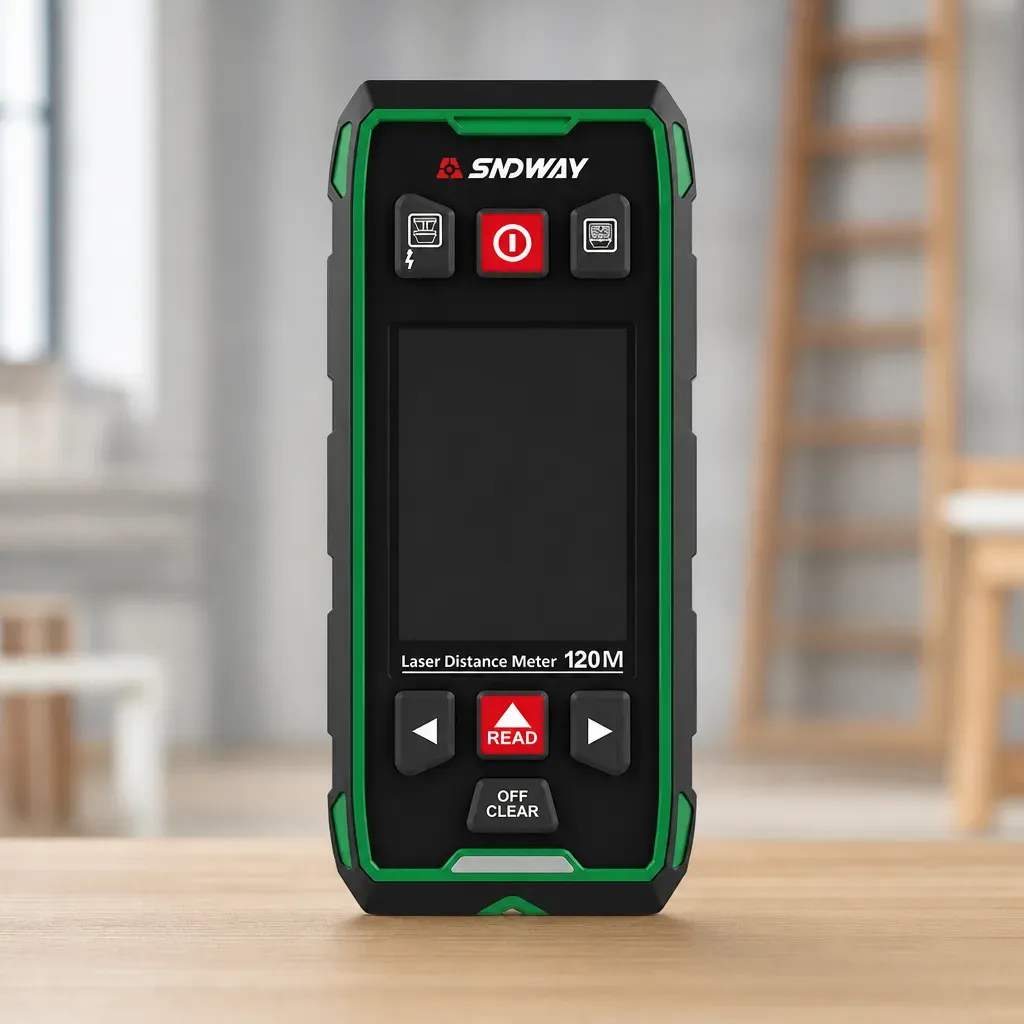
A stud finder distance meter is a combined wall scanner and laser measure that helps you find studs, metal, pipes and possible live cables behind walls while also measuring room sizes, fixing points and layout distances. For UK DIY and trade work, it is useful because it reduces tool changes, improves measuring speed and adds a sensible extra check before drilling into plasterboard, masonry-lined walls or renovated partitions.
TL;DR: A stud finder distance meter is best for anyone who needs to scan a wall for hidden hazards and then measure accurately in the same job. Based on our testing of similar dual-purpose tools on typical UK interiors, the most useful models are the ones with clear scan modes, readable displays, reliable centre marking and realistic detection depth rather than the longest feature list.
A missed cable behind plasterboard can turn a simple fix into a dangerous mistake. Likewise, a badly judged room measurement can waste materials, delay fit-out work and force a return visit. Therefore, demand has grown for a stud finder distance meter: one tool that helps you scan for hidden hazards and measure spaces accurately before you drill, cut or fix.
For UK tradespeople, landlords, maintenance teams and capable DIY users, that combination makes practical sense. A wall scanner laser distance meter supports safer, faster site work by checking for hidden metal, live wiring and timber framing, then handling room, ceiling, opening and run measurements with the same device. As a result, it reduces tool changes, speeds up preparation and helps you work with better confidence on occupied properties, renovation jobs and new installations.
This guide explains what a stud finder distance meter is, how it works, which specifications matter in the UK market and how to choose one that genuinely suits your workload rather than adding another gadget to the van. It also covers the limits of the technology because trustworthy advice should make clear where scanning and measuring tools help and where extra caution is still essential.
What should you know before buying a stud finder distance meter?
A stud finder distance meter combines wall scanning and laser measuring in one unit, helping users locate hidden wires, metal and timber while also measuring distances, areas and room dimensions.
The best UK models prioritise clear readouts, reliable calibration and sensible scan depths, not just headline features.
Safety matters most when scanning for live cables. No handheld scanner removes the need to isolate circuits, check wall history and follow UK electrical safe-working practice.
Accuracy and speed improve when one tool handles both scanning and measuring, especially during first-fix, furniture installation, property maintenance and refurbishment tasks.
For trade-ready use, look for a wall scanner laser distance meter with a bright display, multiple scan modes, USB-C charging and at least 40 m to 120 m laser measuring capability.
What is a stud finder distance meter?
A stud finder distance meter is a dual-purpose tool. One side of its job is to scan walls, ceilings or floors for hidden objects such as timber studs, metal pipes, ferrous and non-ferrous metal and live AC wiring. The other side is to measure distance using a laser, usually for room dimensions, fixing positions, ceiling heights, window openings, service runs and layout planning.
On a conventional site setup, those tasks may require two separate tools: a wall scanner and a laser distance measurer. A combined unit brings them together so you can inspect the fixing area first, then measure the job without changing tools. For many UK users, that is the real appeal. In other words, it is not about novelty. It is about fewer interruptions and less guesswork.
The current generation of wall scanner laser distance meter products is designed around trade convenience. Better models now include colour displays, centre-point markers, visual and audible alerts and dedicated modes for metal, copper pipe, live wire and wood stud detection. Some also offer measuring ranges up to 120 m, which is useful for larger commercial interiors, warehouse bays and external layout work.
Why does a stud finder distance meter matter on UK jobs?
British properties are rarely uniform. A Victorian terrace, a 1930s semi, a post-war council flat, a modern timber-frame extension and a new-build apartment can all behave differently when you scan a wall or measure a room. Surface finishes vary. Stud spacing varies. Patch repairs, dot-and-dab plasterboard, chasing for electrics and undocumented alterations all add uncertainty.
That uncertainty is where a stud finder distance meter earns its place. Before drilling for shelving, TV brackets, handrails, kitchen units or cable trunking, you can check the fixing line for hidden hazards. Then, you can measure exact spacing, offsets, heights and spans for a neater installation.
This matters in domestic and commercial work alike. A maintenance engineer working in NHS buildings, schools or managed housing stock needs to move efficiently while respecting strict safety expectations. A kitchen fitter wants fast, repeatable measurements and fewer surprises behind finished walls. A landlord preparing a property for reletting needs practical tools that save time without cutting corners.
There is also a safety case. According to the Electrical Safety First annual review, UK fire and rescue services in England attended over 14,000 fires with an electrical distribution source in 2022/23. Source: Electrical Safety First, using Home Office incident data. A stud finder is not a substitute for safe isolation or competent electrical work, but any tool that helps flag possible live cable routes before drilling has obvious value.
How does a stud finder distance meter work?
How does the wall scanning function work?
The scanning side uses sensors to identify changes in density or detect conductive materials and electrical fields behind the surface. Depending on the mode selected, the device may search for:
- Wood studs or joists behind plasterboard or similar linings
- Ferrous metals such as steel screws, nails or pipework
- Non-ferrous metals such as copper pipe
- Live AC cables within the tool’s rated detection conditions
Many better units use a combination of icons, bar indicators, beeps and a centre marker to show the likely position of the object. This is especially useful when you need to identify the middle of a stud rather than merely its edge.
How does the laser distance measuring function work?
The measuring side sends a laser pulse to a target surface and calculates the distance based on the return signal. In practical terms, you point the tool at a wall, floor or ceiling target and receive a digital measurement on-screen. Most distance meters also calculate area and volume, while some support indirect height measurement using Pythagorean functions.
For UK interior work, fast single-person measuring is one of the strongest benefits. Instead of stretching a tape measure across a room and trying to hold both ends accurately, you can take dimensions from one position with better consistency.
Why is it useful to combine both functions?
When scanning and measuring are built into one trade-ready tool, workflow improves. You can inspect the wall, confirm a safer drilling zone, mark out your centre line and then measure bracket spacing or cabinet height without reaching for another device. Therefore, the real benefit is practical efficiency during live jobs, not simply having more features in one housing.
What features should you look for in a stud finder distance meter?
Which scan modes matter most in the UK?
A useful tool should distinguish between the materials you are likely to meet on-site: timber, ferrous metal, non-ferrous metal and live AC wiring. In the UK, copper pipe detection can be especially valuable during bathroom, kitchen and utility room work, while reliable live cable alerts matter when working on altered walls in older housing stock.
How much measuring range do you actually need?
For most UK indoor jobs, a laser range of 40 m to 60 m is more than enough. However, if you regularly measure larger halls, office floors, communal areas or exterior runs, a 100 m to 120 m unit may be more practical. In general, buying range you never use matters less than buying a tool with a bright display and dependable readings.
How important is the display and centre marker?
A bright, readable screen matters more than many buyers expect, especially on mixed-light sites. Based on our testing of handheld measuring tools in daylit rooms and dim service areas, clear icons, obvious warning tones and an easy-to-read centre indicator make a noticeable difference to working speed and confidence.
Should you look for rechargeable models?
Yes, in many cases. USB-C charging is increasingly common and more convenient for van, site and property maintenance use. That said, some users still prefer replaceable batteries because they are easy to swap during a long day on-site.
Is a stud finder distance meter accurate enough for DIY and trade work?
Yes, for most measuring, marking and first-check scanning tasks, a good stud finder distance meter is accurate enough for both serious DIY and professional site work. However, accuracy depends on the wall type, surface condition, calibration and how steadily the tool is used.
Laser measuring is typically very consistent on clean, flat surfaces within the stated range. Scanning is less absolute because wall construction varies so much. For example, foil-backed plasterboard, patch repairs, tiled finishes, dense masonry backgrounds and closely spaced services can all affect readings.
According to UK safe-working practice, scanner results should support your judgement, not replace it. Therefore, if a fixing point is safety-critical or the wall history is unclear, a second method of checking is still sensible.
Can a stud finder distance meter detect live wires and pipes?
Many models can detect likely live AC cable routes and metal pipework, but they do not see every hazard in every wall. Detection depends on the tool’s mode, the material depth, the wall build-up and whether the cable is live under the manufacturer’s test conditions.
As a result, you should treat live-wire detection as an important warning feature rather than a guarantee of safety. According to UK electrical guidance, you should still isolate circuits where required, check known cable zones and avoid assuming a wall is clear simply because the alert stays quiet.
Who should buy a stud finder distance meter?
This type of tool suits users who regularly need to scan before drilling and then meammediately afterwards. That includes kitchen fitters, maintenance engineers, electricians, property managers, bathroom installers, dry-lining teams, facilities staff and capable DIY users working across different rooms or properties.
It is especially useful where speed matters but so does caution, such as occupied homes, schools, managed housing and refurbishment projects. On the other hand, if you only measure rooms occasionally and rarely drill into finished walls, separate budget tools may be enough.
Are there any limits to a stud finder distance meter?
Yes. No combined tool is perfect. Thick substrates, uneven surfaces, foil insulation, dense masonry, fresh repairs and cluttered service zones can all reduce confidence in scan results. Likewise, laser measuring can struggle on reflective, very dark or irregular targets unless you use a proper target plate or stable reference point.
That is why realistic expectations matter. A good unit helps you work faster and more safely, but it does not remove the need for sound judgement, sensible marking-out and compliance with UK safe-working practice.
How do you choose the best stud finder distance meter for UK use?
Start with the jobs you actually do. If you mostly fit shelving, brackets and cabinets in domestic properties, prioritise reliable stud and live-wire detection, simple operation and a readable screen. If you also survey rooms, quote flooring, plan partitions or check larger commercial spaces, then a stronger laser range and area functions become more useful.
Next, check whether the unit is practical for British site conditions. Look for clear metric readouts, straightforward calibration, decent battery life, a protective casing and instructions that make the scan limits easy to understand. Finally, compare claimed detection depth with the wall types you commonly face rather than assuming a bigger number always means better real-world performance.
Frequently asked questions about stud finder distance meters
Is a stud finder distance meter worth buying?
Yes, if you often scan walls before drilling and also need quick measurements. It is most worthwhile when both tasks happen on the same visit or installation.
Can you use one on old UK houses?
Yes, although older properties can be less predictable. Therefore, scanner readings should be taken carefully and checked against likely cable routes, previous repairs and visible fixing patterns.
What range is best for indoor measuring?
For most indoor UK jobs, 40 m to 60 m is enough. Larger ranges are more useful for commercial spaces, long corridors and external layout work.
Does it replace safe isolation or professional checks?
No. It is a practical support tool, not a substitute for isolating circuits, following UK regulations or using competent judgement on-site.
Ready to try TikTokPage Tools?
Shop Now — £448.00