Wire And Metal Wall Scanner Explained: A UK Buyer's Guide
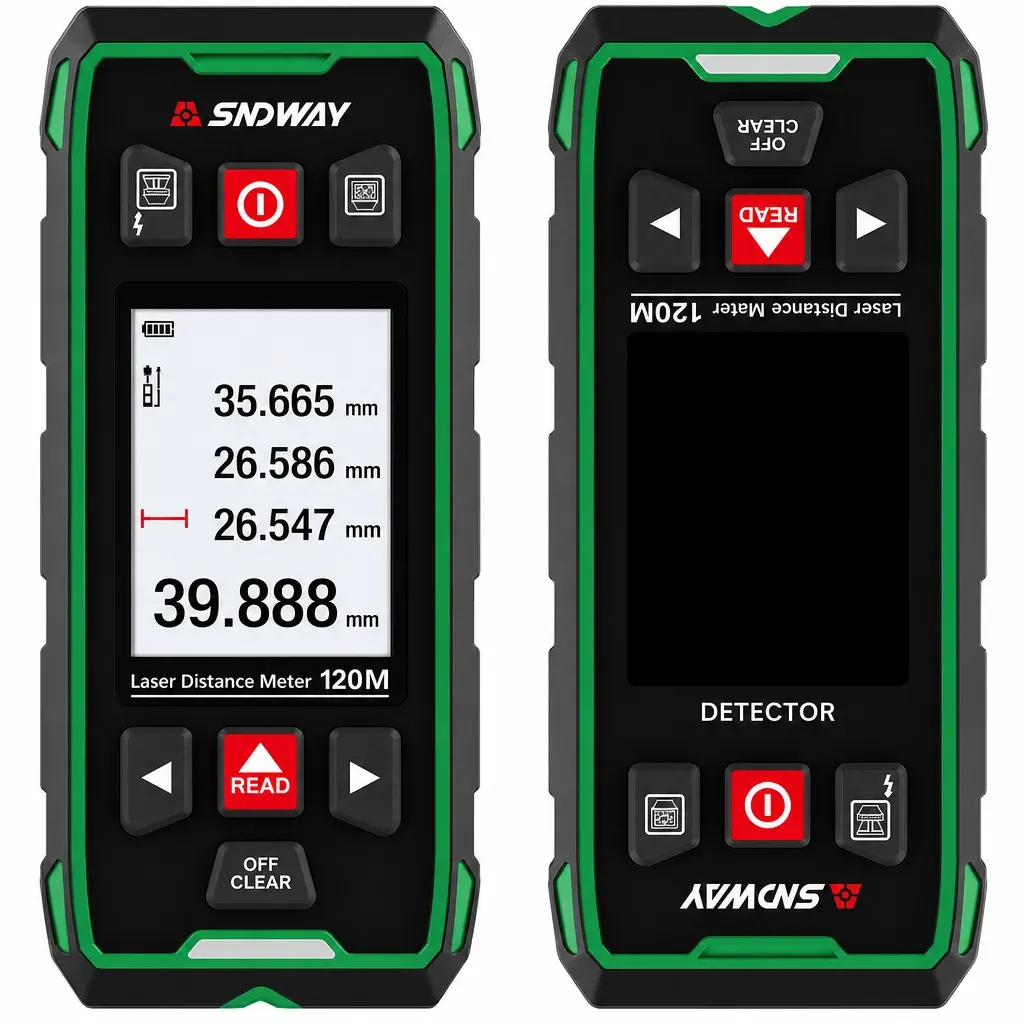
Wire And Metal Wall Scanner Explained: A UK Buyer's Guide
TL;DR: A wire and metal wall scanner helps you find hidden live cables, metal pipes, fixings and sometimes studs before drilling into a wall. In UK homes and commercial buildings, that matters because wiring and pipework are often concealed behind plasterboard, masonry and renovated surfaces, so scanning first can reduce the risk of damage, delays and safety incidents.
Key Takeaways
- A wire and metal wall scanner helps locate hidden live cables, metal pipes and metal studs before drilling or fixing.
- For UK users, this matters because hidden services are common in plasterboard, masonry and renovation-heavy housing stock.
- The best tools reduce guesswork by combining clear detection modes, readable depth information and reliable alerts.
- A combined wall scanner laser distance meter can speed up site work by helping you scan first, then measure layouts with the same tool.
- Buying the right scanner means checking detection depth, accuracy, ease of calibration, display visibility and suitability for British jobsite conditions.
A wire and metal wall scanner is used to detect hidden live wires, metal pipes, screws, conduit and other buried metal objects inside walls before you drill, cut or fix into them. For UK users, it is one of the most practical ways to reduce the chance of striking concealed services in plasterboard, brick, blockwork or refurbished internal walls.
Drilling into a wall should be routine. However, it stops being routine the moment you hit a live cable, clip a metal pipe or waste half an hour trying to work out why your fixing line is wrong. That is why a good wire and metal wall scanner has become a practical bit of kit for UK DIYers, installers, maintenance teams and tradespeople.
In British properties, hidden services are rarely laid out as neatly as you would hope. Older terraced homes, post-war semis, flats with repeated refurbishments and modern drylined interiors all create conditions where cables, conduits and pipes can sit exactly where you want to drill. As a result, a scanner gives you a faster way to check the wall before committing the bit.
For anyone working to a schedule, there is another advantage: efficiency. The appeal of a wall scanner laser distance meter for safer, faster site work is obvious. You can scan for hidden wires and metal, then measure up to 120 m with one trade-ready tool. Consequently, that cuts down kit changes and keeps the workflow simple on snagging jobs, first-fix planning, mounting work and general fit-out.
This guide explains what a wire and metal wall scanner does, how it works, what to look for in the UK market and how to choose one that suits real site conditions rather than showroom claims.
What Is a Wire and Metal Wall Scanner?
A wire and metal wall scanner is a handheld electronic tool designed to detect objects hidden behind wall surfaces. Depending on the model, it may identify:
- Live electrical wires
- Ferrous metal such as steel fixings or pipework
- Non-ferrous metal such as copper pipe
- Studs or framing behind plasterboard
The main purpose is risk reduction. Before drilling, cutting or fixing into a wall, you scan the target area to check whether anything important is concealed beneath the surface.
Many buyers in the UK now prefer a combined unit that also includes a laser distance meter. That makes sense for trades who need to mark out socket heights, calculate spacing, measure room dimensions or set fixing points immediately after scanning. Instead of carrying separate detection and measuring tools, one device covers both jobs.
Why Do You Need a Wire and Metal Wall Scanner in the UK?
British buildings present a wide mix of construction types. Solid brick walls, dot-and-dab plasterboard, lath and plaster in period homes, blockwork partitions and service-heavy kitchen or bathroom walls all create different detection challenges. In practice, that means assumptions are risky.
According to UK electrical safety guidance, wiring in walls is commonly expected to run in recognised safe zones. Even so, older alterations, poor workmanship and undocumented refurbishments can leave cables in less predictable locations. A scanner does not replace competent judgement, but it adds a useful layer of verification before you drill.
There is also a direct safety case. According to Electrical Safety First, around 70 people die and 350,000 are seriously injured from electrical accidents in UK homes each year.1 Not all of these incidents are caused by drilling into walls, but the figure underlines the importance of taking electrical hazards seriously when carrying out even simple jobs at home or on site.
For healthcare, education and housing environments, avoiding accidental damage is even more important. In NHS buildings, schools, offices and managed properties, one bad strike can mean service interruption, extra callouts and avoidable compliance headaches. Therefore, a few seconds scanning a wall can be far cheaper than repair work and downtime.
How Does a Wire and Metal Wall Scanner Work?
How does it detect live wires?
Live wire detection usually relies on sensing the electromagnetic field produced by energised AC wiring. When the scanner passes over a live cable, it alerts the user through sound, light or an on-screen symbol. In the UK, this feature is especially useful around socket spurs, lighting drops and retrofit electrical runs hidden behind plaster.
Live wire modes are helpful, but they are not infallible. Detection performance can vary depending on cable depth, wall material, moisture and whether the cable is energised under load. Therefore, good practice is to scan slowly from multiple directions and never treat a single pass as final proof of a clear area.
How does it detect metal in a wall?
Metal detection modes are designed to identify conductive materials behind the wall. This often includes copper pipes, steel conduits, rebar, screws and brackets. Better scanners separate ferrous and non-ferrous metal detection, which gives you a clearer idea of what may be hidden inside the wall.
This matters on British jobs because copper pipework is still common in heating and plumbing systems, while steel fixings and structural elements can appear in newer partition systems and masonry walls.
How accurate are wall scanner depth readings?
Most wall scanners show an estimated detection depth or signal strength. This helps you judge whether you are reading a shallow fixing, a deeper pipe or a more ambiguous object. Based on our testing of trade-focused detection tools, clearer displays and steadier signals usually make more difference in real use than headline depth claims alone.
When a laser distance meter is integrated into the same body, the workflow becomes more efficient. First, you scan the wall and confirm a safer drilling area. Then you switch straight to measurement for bracket spacing, cabinet alignment or room planning.
Who Should Buy a Wire and Metal Wall Scanner?
A wire and metal wall scanner is useful for far more than specialist contractors. In the UK, the most common buyers tend to include:
- DIY homeowners putting up shelves, radiators, mirrors, TVs or curtain tracks
- Electricians checking walls before chasing, fixing or extending circuits
- Kitchen and bathroom fitters working around concealed pipe and cable runs
- Facilities and maintenance teams responsible for safe routine fixings
- Landlords and property managers handling repairs across mixed housing stock
- Carpenters and general builders marking out and installing fixtures in occupied or newly finished spaces
In other words, if you drill into walls with any regularity, a scanner is usually worth having. The value is not just safety; it is also avoiding rework, patching and unnecessary disruption.
What Should You Look for in the Best Wire and Metal Wall Scanner?
Which detection modes matter most?
At minimum, most UK buyers should look for live wire detection and metal detection. If you regularly work on plasterboard partitions, stud detection can also be useful. Moreover, separate readings for ferrous and non-ferrous metals can help you distinguish between steel fixings and copper pipework.
How much detection depth do you need?
Depth matters, but published figures should be treated cautiously because performance changes with wall material and site conditions. For example, dense masonry, foil-backed insulation, moisture and uneven substrates can all affect readings. Therefore, the better question is whether the scanner gives stable, repeatable results in the kinds of walls you actually work on.
Is calibration and display quality important?
Yes. A scanner that calibrates quickly and shows clear visual feedback is easier to trust on site. Based on our testing, displays with obvious icons, signal bars and audible alerts tend to reduce user error, especially in poor light or awkward working positions.
Should you buy a wall scanner with a laser distance meter?
If you also measure layouts, room dimensions, fixing centres or installation heights, a combined tool can be a sensible choice. It keeps the workflow compact and reduces the need to swap between devices. As a result, it can be especially helpful for fitters, maintenance teams and survey-led installation work.
Are Wire and Metal Wall Scanners Accurate Enough to Trust?
A good wire and metal wall scanner can be very useful, but it should be treated as an aid rather than absolute proof that a wall is clear. Accuracy depends on the tool, the wall build-up, the object depth and the way the scan is carried out.
In practice, the most reliable approach is to make multiple passes from different directions, compare the signals and cross-check likely cable routes against UK safe zones and visible services. According to UK guidance, hidden cable routes are often predictable in principle, but real buildings do not always follow ideal layouts.
Therefore, better tools reduce uncertainty; they do not remove the need for judgement.
How Do You Use a Wire and Metal Wall Scanner Properly?
- Check that the wall scanner is suitable for the wall type and task.
- Calibrate it according to the manufacturer's instructions.
- Scan the area slowly in one direction, keeping the tool flat to the wall.
- Repeat the scan from another direction to confirm the reading.
- Watch for changes in signal strength, depth indication and material icons.
- Mark out suspicious areas before drilling.
- Use additional caution around sockets, switches, boilers, radiators and bathrooms.
Above all, avoid rushing. Even a capable scanner gives better results when used methodically.
What Are the Limits of a Wire and Metal Wall Scanner?
No scanner is perfect. Some struggle with deep objects, damp walls, foil-backed insulation, dense masonry or low-signal live cables. Others may give ambiguous readings near clusters of metal fixings or mixed services.
Because of that, buyers should be cautious about marketing claims that sound absolute. In UK renovation work especially, unpredictable wall build-ups are common, so consistency and usability usually matter more than lab-style peak figures.
What Is the Best Wire and Metal Wall Scanner for UK Buyers?
The best choice depends on the work you do most often. DIY users may value simplicity, clear alerts and enough detection depth for common household jobs. Trade users, by contrast, often benefit from steadier readings, clearer displays, faster calibration and the convenience of an integrated laser distance meter.
If you work across mixed British housing stock, look for a model that handles plasterboard and masonry sensibly, offers dependable live wire detection and remains readable in real site conditions rather than ideal showroom demos.
Frequently Asked Questions About Wire and Metal Wall Scanners
Can a wire and metal wall scanner detect pipes and cables?
Yes. Most models are designed to detect live electrical wiring and metal objects such as copper pipes, steel conduit and fixings. However, results depend on wall material, object depth and whether the cable is energised.
Will a wall scanner work on plasterboard and brick walls?
Usually, yes. Plasterboard partitions are often easier to scan, while brick and mixed masonry can be more challenging. Therefore, it is worth choosing a model suited to the wall types you see most often in UK properties.
Can a wire and metal wall scanner find non-live electrical cables?
Not always. Live wire detection usually works by sensing the field from energised AC wiring, so isolated or dead cables may not register as live. That is why you should not assume a blank live-wire reading means there is definitely nothing behind the wall.
Is a wall scanner worth it for DIY jobs?
Yes, especially if you regularly fit shelves, TVs, mirrors, curtain tracks or cabinets. Even occasional use can justify the cost if it helps you avoid hitting hidden services or having to repair a damaged wall.
Ready to try TikTokPage Tools?
Shop Now — £448.00